Click For Audio
Where In The World Are You From?

On this page we will practice using the verb to be to talk about countries and nationalities.
Countries and Nationalities
This is Celia.
She's from England.
She's British.



This is Jake.
He's from France.
He's French.

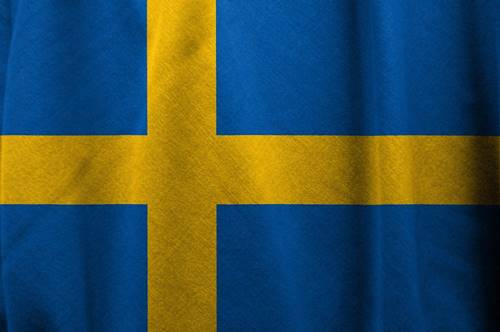

This is Sammy.
He's from Sweden.
He's Swedish.
When we talk about where someone is from, we can use the name of a country, which is a noun. This type of noun begins with a capital letter.
ex.
She is from Canada.
When we talk about someone's nationality, we need to use the adjective form of the country. This type of adjective also begins with a capital letter.
ex.
She is Canadian.
Grammar Focus
Nouns Adjectives
Countries Nationalities
Canada Canadian
England British
The United States American
Australia Australian
Ireland Irish
New Zealand New Zealander
South Africa South African
Word Transformation
We can use suffixes to make nouns into adjectives. Below you will find the most common suffixes that make countries (nouns) into nationalities (adjectives).
Below each group, you will find an approximation of the percentage of adjectives that use this suffix to make nationalities from country names.
Listen to how I pronounce these adjectives.
ian / -an / -ean
Italian
Russian
Mexican
German
Korean
(55%)
-ish
Irish
Spanish
Turkish
Scottish
Finnish
(15%)
-ese
Japanese
Chinese
Portuguese
Vietnamese
Maltese
(10%)
-i
Iraqi
Israeli
Pakistani
Kuwaiti
Bangladeshi
(7%)
-ic / -er
Icelandic
Icelander
New Zealander
3%
Irregular
Greek
Swiss
Thai
Dutch
Czech
(10%)
Speaking Practice
We have 10 short dialogues. I will say what's written under column A, and you should say what's written under column B.
We will use words from the chart above.
A: She's from Ireland. B: Oh, so she's Irish.
A: He's from Russia. B: Oh, so he's Russian.
A: She's from China. B: Oh, so she's Chinese.
A: He's from Iraq. B: Oh, so he's Iraqi.
A: She's from Greece. B: Oh, so she's Greek.
A: He's from Korea. B: Oh, so he's Korean.
A: She's from Finland. B: Oh, so she's Finnish.
A: He's from Japan. B: Oh, so he's Japanese.
A: She's from Bangladesh. B: Oh, so she's Bangladeshi.
A: He's from Holland. B: Oh, so he's Dutch.