Click for Audio
Snakes In The Grass
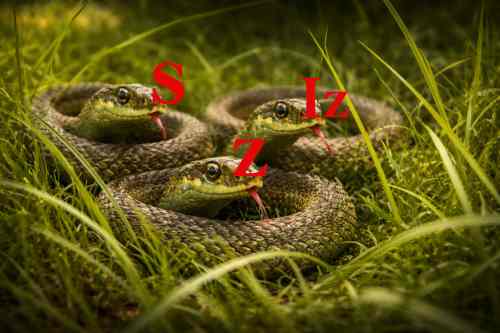
On this page, we will look at the three different pronunciations of final -s.
When the letter s is at the end of an English word, it takes one of three pronunciations: /s/,/z/ or /Iz/. It all depends on what sound comes before the final s.
Reviewing Concepts
We saw that /s/ is a fricative. It does not stop like /p/, /d/ or /k/, but instead makes a continuous airflow.
We also looked at a mouth map and saw where the /s/ sound is produced.
Some other fricatives produced in the same general area are: /z/, /ʃ/, /d͡ʒ/, /t͡ʃ/, and /ʒ/.
Our third consideration was whether the sounds are voiced (causing the vocal cords to vibrate) or voiceless (not causing vibration).
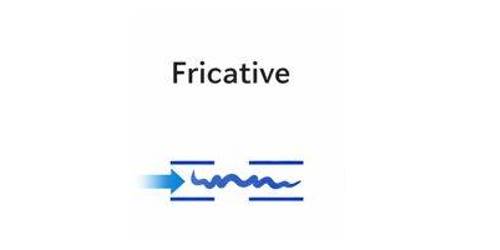
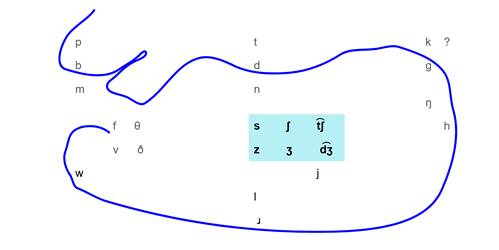
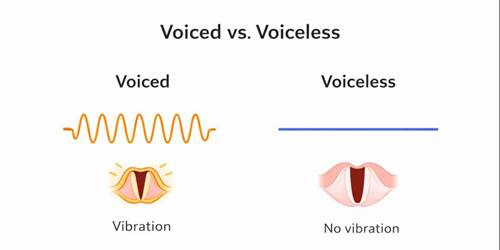
Let's put all that knowledge together, so that we can start to see why the letter s makes three different sounds when it is at the end of a word.
The Miser Revisited
Remember the miser? He wants to save energy. If we are not vibrating our vocal cords (making a voiceless consonant), he wants us to continue in a voiceless way.
The word stop ends with a /p/. /p/ is voiceless and /s/ is voiceless.
stop - stops - /s/

If we are vibrating our vocal cords (making a voiced sound), the miser wants us to continue in a voiced way.
The word run ends with an /n/. /n/ is voiced. We can't use /s/ because it's voiceless, but its minimal pair /z/ is voiced. Using a voiced /z/ after a voiced sound makes the miser very happy!
run - runs - /z/
Two Down, One To Go
That's two out of three! We have /s/ for words that end with a voiceless consonant and /z/ for words that end with a voiced sound. Now, let's look at why we sometimes need to add an extra syllable /Iz/ to words that end with 's'.
We have seen that /s/ is a fricative and that it is produced in the middle of the mouth. It has a minimal pair /z/ that is produced at the same place and in the same way. Four other sounds are produced very close by, and they are: /ʃ/, / t͡ʃ/, /ʒ/ and /d͡ʒ/.
Don't worry! These symbols will be explained for you below.
Try to say this - hiss
Now let's make it plural.
hissss
That won't work! We need a vowel in between the fricative at the end and the final letter 's'. If we have a vowel, that means we're making a voiced sound, which means we need the 's' to be a /z/. The final result is an extra syllable that sounds like this /Iz/
hiss - hisses - /Iz/
And that sound /Iz/ is our third and final way to pronounce 's' when it's at the end of a word.
Reviewing Fricatives
To help you recognize the middle-mouth fricatives that cause us to say /Iz/, I have made a chart. There are two words under each of the six fricatives we are concerned with. The first word demonstrates what the fricative sounds like at the beginning of a word. The second word demonstrates the sound at the end of the word. Let's take a minute to familiarize ourselves with these six sounds.

The Solution
1
If the word ends with one of the voiceless consonants (ex. p, t, k, f, etc.), the s will sound like /s/.
Voiceless
/s/
works
stops
eats
jumps
kicks
2
If the word ends with a voiced sound (all vowels, b, d, g, v, etc.), the letter s will sound like /z/.
Voiced
/z/
lives
gives
goes
tells
plays
3
If the word ends with a fricative: /s/, /z/, /ʃ/, /d͡ʒ/, /t͡ʃ/, and /ʒ/, a full syllable is needed. The s will sound like /Iz/.
Fricatives
/ɪz/
washes
fixes
churches
buses
oranges
Now that we have practiced these words in isolation, we need to practice them as they appear in natural language. There will be plenty of exercises to practice on other pronunciation pages.
FOLLOW THE INVESTIGATION
PRONUNCIATION
NEXT STEP
RELATED PAGES
Coming Soon
FURTHER STUDY
Coming Soon